
 The Story of American Television
Original Airdates: May 16-19, 2025
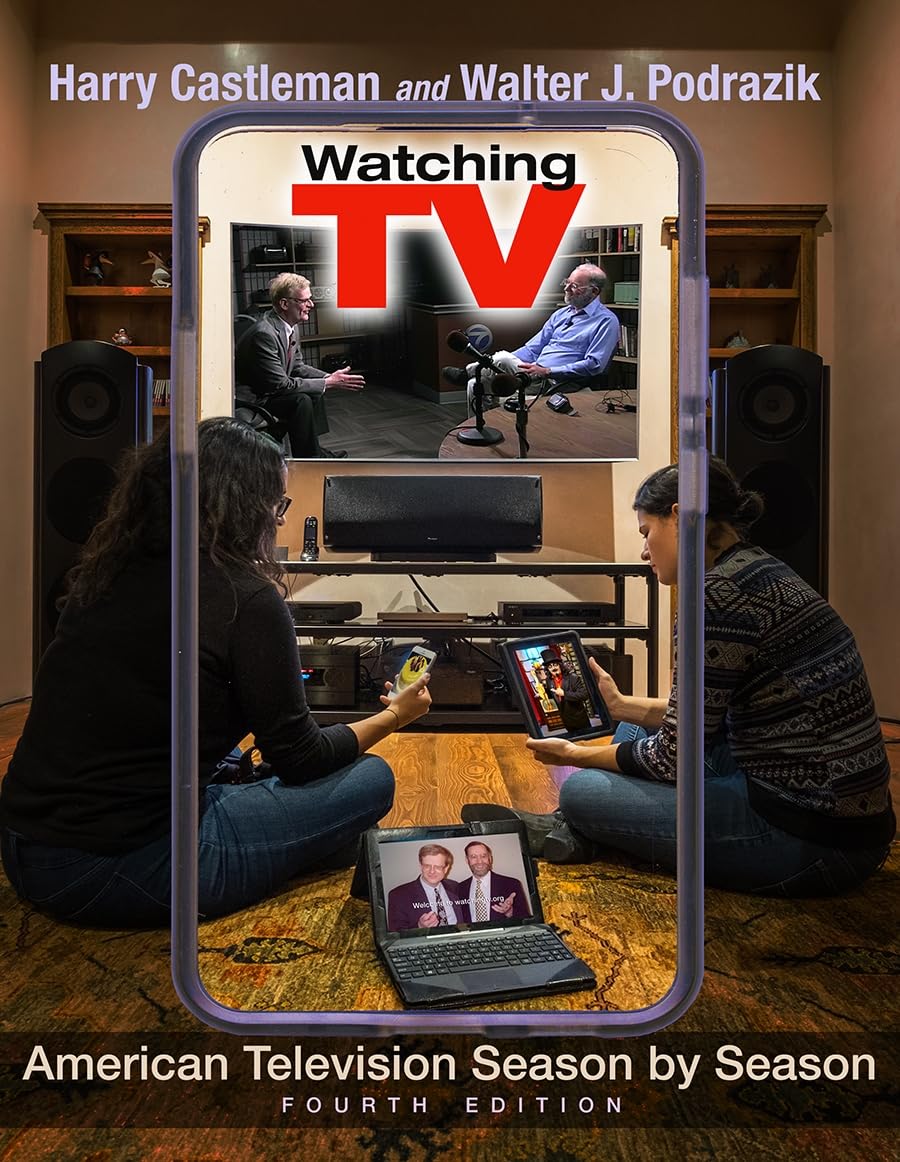
TVC 690.3: Ed welcomes back Harry Castleman and Walter J. Podrazik, co-authors of Watching TV: American Television Season by Season, a sweeping look at the history of television from 1944 through the present day, from its early inception as a passive activity to its current form as a multi-tiered experience. Recently updated and re-released as a fourth edition, Watching TV not only takes you behind the scenes of every prime time season and prime time schedule over the past nine decades, but includes an ongoing timeline of the major personalities, trends, and breakout shows that comprise the individual stories of each television season. Watching TV: Revised Fourth Edition is available wherever books are sold through Syracuse University Press. Topics this segment include how, despite the many ways in which television has changed since 1944, two things have remained constant: (1) networks want to control the content we watch, while viewers want as many choices as possible, and (2) viewers want to pay as little as possible for the content they watch.
Jack Gould, Michael Nesmith, and the early influencers of television
Original Airdates: May 16-19, 2025
 TVC 690.4: Harry Castleman and Walter J. Podrazik, co-authors of Watching TV: American Television Season by Season, talk to Ed about how the phenomenon of “time shifting” for TV viewers began long before the era of streaming; why Jack Gould, television critic for the New York Times during the 1950s and ’60s, can be considered one of the first “influencers” of television (and why Gould was particularly enamored of the many live dramatic anthology series that dominated the first decade of network TV); and why Michael Nesmith (The Monkees, Elephant Parts) was proud to be one of the influencers of television during the mid-to-late 1960s—an era that Nesmith once described to Wally as the “teen age” years of the medium.
Watching TV: Revised Fourth Edition is available wherever books are sold through Syracuse University Press.
The Fugitive, The Mary Tyler Moore Show, and Other Famous Series Finales
Original Airdates: May 23-26, 2025
 TVC 691.1: Part 2 of a conversation that began last week with Harry Castleman and Walter J. Podrazik, co-authors of Watching TV: American Television Season by Season, a sweeping look at the history of television, from its early inception in 1944 through the present day, that not only takes you behind the scenes of every prime time season and prime time schedule over the past nine decades, but tells you what was actually on TV each year; what was happening behind the scenes in television at the times those shows were made; and how the shows we saw from year to year often reflected various events that were happening in the world at large. Watching TV: Revised Fourth Edition is available wherever books are sold through Syracuse University Press.
 Topics this segment include how the final episode of The Fugitive (originally broadcast on ABC on Aug. 29, 1967) ushered in the era of series finales that attempt to wrap up all the loose ends of a show’s characters and storylines; how even an unsatisfactory finale shows how much we care about the characters of our favorite shows (and why that’s an integral part of the story of American television); and whether physical media such as Blu-rays and DVDs still have a place in television today.
1965 and the Dawn of the Second Season
Original Airdates: May 23-26, 2025
TVC 691.2: Harry Castleman and Walter J. Podrazik, co-authors of Watching TV: American Television Season by Season, talk to Ed about the 1965-1966 television season, a landmark year that not only saw the premiere of many series that are still considered classics (including Get Smart, I Dream of Jeannie, Green Acres, and The FBI), but the start of the now-common network practice of midseason replacements—a phenomenon that came about by accident. Other topics this segment include why network TV schedules used to always begin in September; and the evolution of single sponsor shows during the first decade of network to the now-standard practice of participating sponsors. Watching TV: Revised Fourth Edition is available wherever books are sold through Syracuse University Press.